INTERPOL, formally known as the International Criminal Police Organization (INTERPOL), is a membership-based organization. It is an inter-governmental organization that facilitates cooperation among police forces of different countries. It acts as a coordination and information-sharing platform to combat transnational crimes such as organized crime, terrorism, trafficking, and cybercrime, where cooperation between countries
is essential.
- Established: It began as the International Criminal Police Commission, created in September 1923, and became the International Criminal Police Organization-INTERPOL in 1956.
- Dr Johannes Schober, then President of the Vienna Police, served as President of INTERPOL from its creation until 1932.
Historical Background
- Headquarters: Lyon, France
- INTERPOL Global Complex for Innovation- Based in Singapore since 2015
- Membership: 196 countries
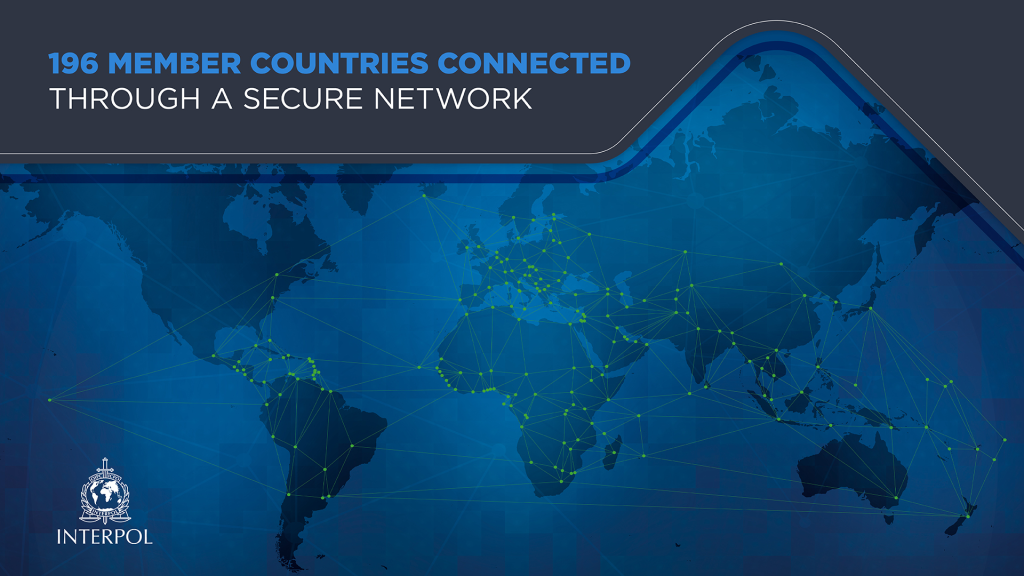
India’s Membership:
- India joined the International Criminal Police Commission (the precursor to modern Interpol) in 1949. The organization was formally established as INTERPOL (International Criminal Police Organization) with its current Constitution adopted in 1956. Therefore, India joined INTERPOL in 1956.
- CBI as National Central Bureau for INTERPOL in India coordinates international police cooperation through INTERPOL
- BHARATPOL portal was launched in 2025 by Shri Amit Shah, Union Home Minister of India. The portal allows central and state agencies to connect with the INTERPOL for real-time information sharing
Objectives and Functions
The primary role of INTERPOL is to support and enhance cooperation among national
law-enforcement agencies.
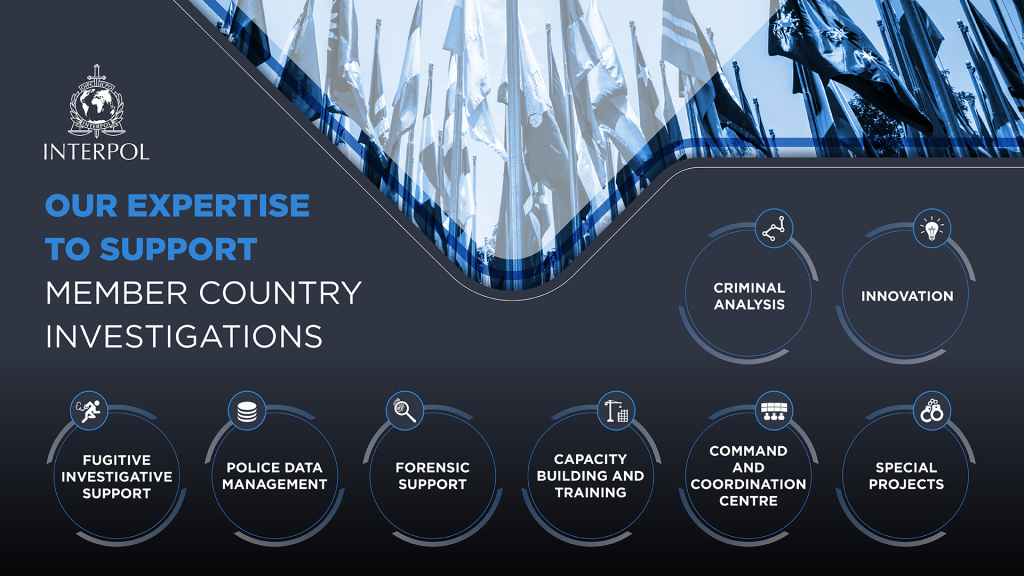
Key objectives include:
- Collecting and sharing criminal intelligence globally
- Assisting in cross-border investigations
- Facilitating information exchange related to fugitives, missing persons, stolen property, and organized crime
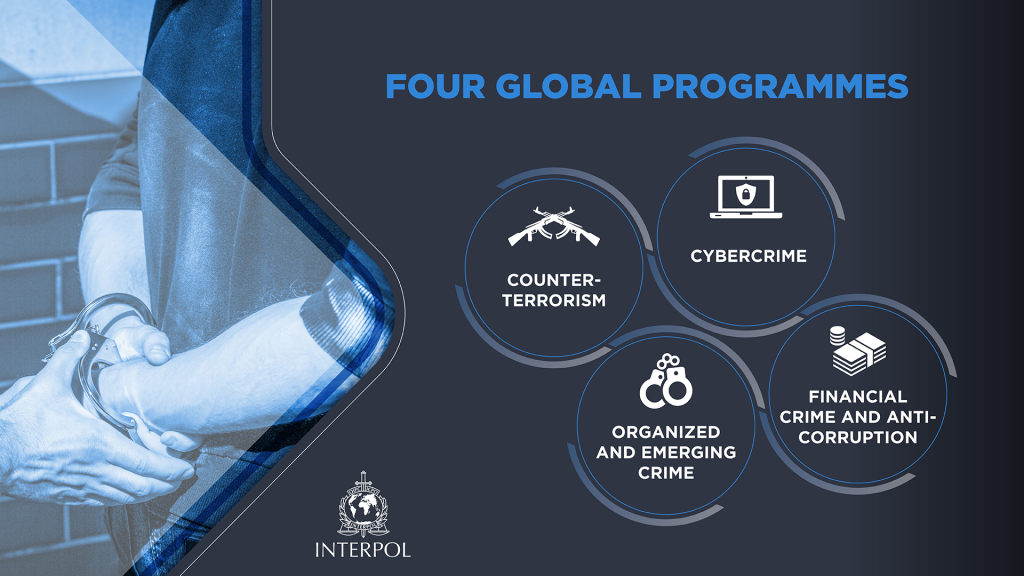
- Supporting member countries in combating:
- Terrorism
- Cybercrime
- Human trafficking
- Drug trafficking
- Financial and economic crimes
- Environmental crimes and others
Important: INTERPOL does not have powers of arrest, investigation, or prosecution. All enforcement actions are carried out by national authorities under their domestic laws.
Organizational Structure (Composition)
(a) President
- Elected by General Assembly for a 4-year term
- Provides leadership and chairs key meetings
- Does not manage daily operations
(b) Secretary General
- Appointed for a 5-year term
- Responsible for day-to-day administration
- Heads the General Secretariat
(c) General Secretariat
- It is the body that coordinates all policing and administrative activities
- Permanent administrative body
- Handles operational coordination and data management
- Works on specialized crime areas such as cybercrime, terrorism, trafficking, and financial crime
(d) General Assembly
- The General Assembly is INTERPOL’s supreme governing body, comprising representatives from each of our member countries.
- Meets once every year
- Takes all the major decisions affecting general policy, the resources needed for international cooperation, working methods, finances and programmes of activities
INTERPOL Notices
INTERPOL Notices are international requests for cooperation or alerts allowing police in
member countries to share critical crime-related information. Notices are published by the
General Secretariat at the request of a National Central Bureau and are made available to all
our member countries
Major INTERPOL Notices include:
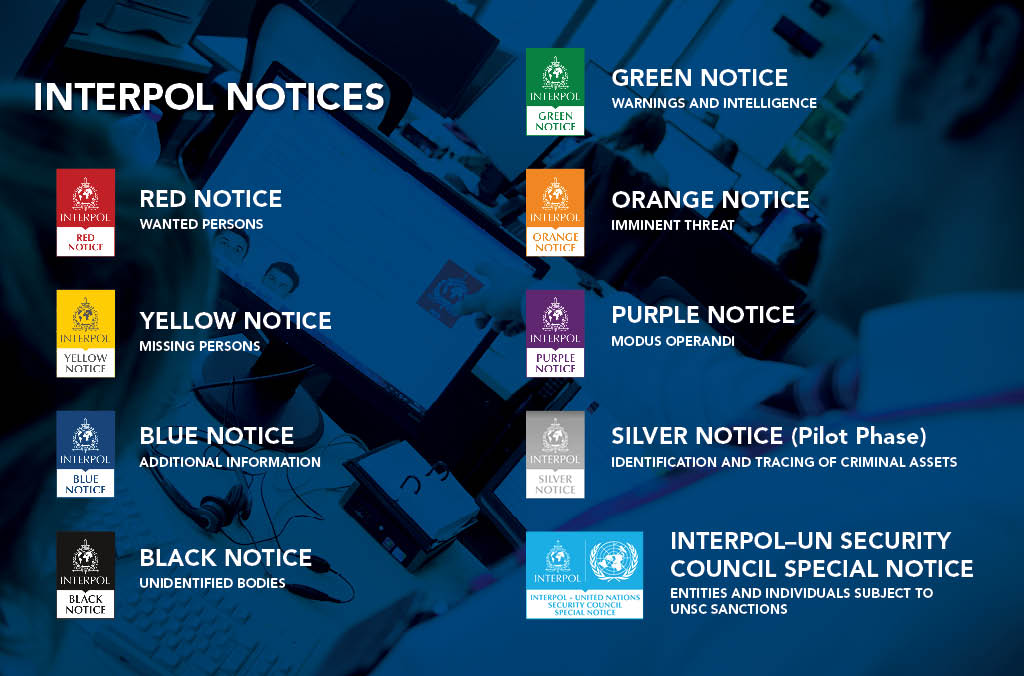
- Red Notice: To seek the location and arrest of persons wanted for prosecution or to serve a sentence.
- Yellow Notice: To help locate missing persons, often minors, or to help identify persons who are unable to identify themselves.
- Blue Notice: To collect additional information about a person’s identity, location or activities in relation to a criminal investigation.
- Black Notice: To seek information on unidentified bodies.
- Green Notice: To provide warning about a person’s criminal activities, where the person is considered to be a possible threat to public safety.
- Orange Notice: To warn of an event, a person, an object or a process representing a seriousand imminent threat to public safety.
- Purple Notice: To seek or provide information on modus operandi, objects, devices and concealment methods used by criminals.
- Silver Notice (pilot phase): To identify and trace criminal assets
INTERPOL – United Nations Security Council Special Notice: Issued for entities and
individuals who are the targets of UN Security Council Sanctions Committees.
Several fundamental texts which make up INTERPOL’s
legal framework
- The Constitution: Adopted in 1956, the Constitution is our main legal instrument. Four main principles established by the Constitution govern INTERPOL’s action in the execution of our mandate: National sovereignty; Respect for Human Rights; Neutrality; and Constant and active cooperation.
- INTERPOL strictly adheres to Article 3 of its Constitution, which prohibits intervention in political, military, religious, or racial matters.
- The General Regulations: The General Regulations supplement the Constitution and provide additional provisions.
- The Rules of Procedure of the General Assembly and Executive Committee: These documents layout in detail the rules that govern the sessions of the General Assembly and Executive Committee.
- Financial Regulations: The Financial Regulations define how our budget is drafted and implemented
- The Statute of the Commission for the Control of INTERPOL’s Files: The Commission for the Control of INTERPOL’s Files (CCF) is an independent, impartial body, officially responsible for ensuring that the processing of personal data by the General Secretariat conforms to the applicable INTERPOL rules.