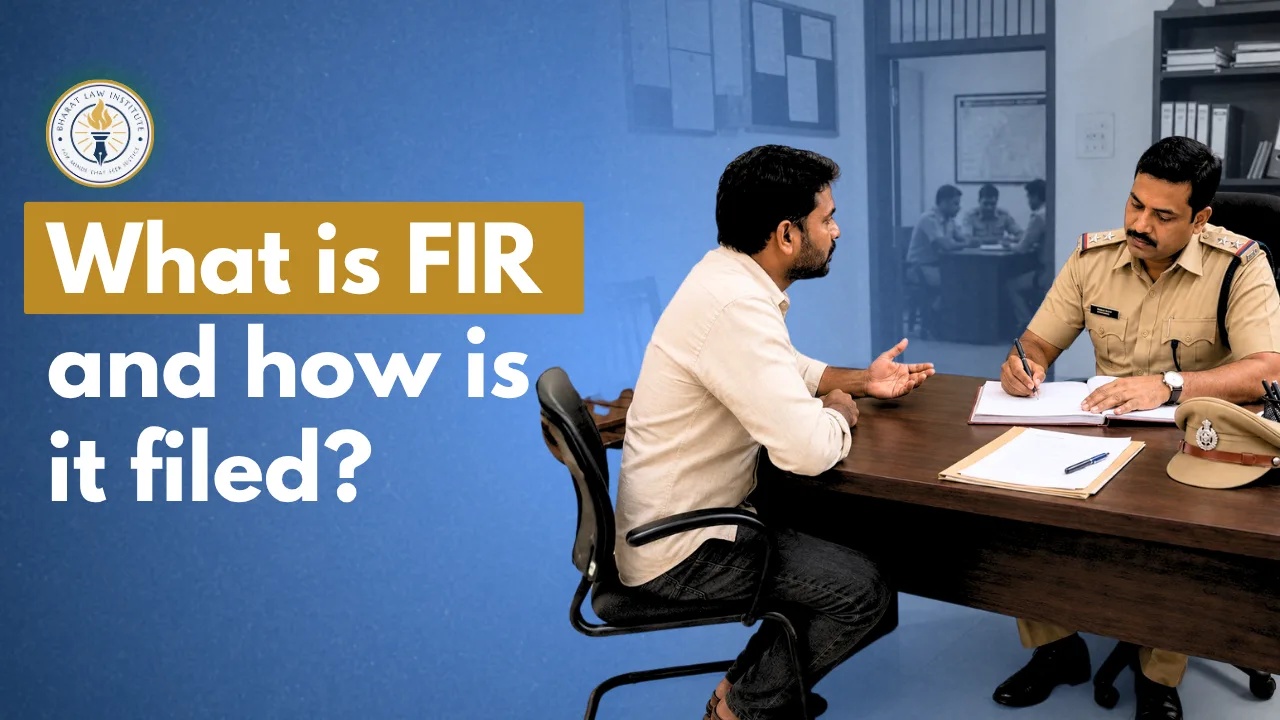
For Many People, the Word “FIR” Appears During Stressful Moments
Most people do not think about police procedures until they suddenly become part of a difficult situation.
A theft happens.
An accident occurs.
Someone faces violence, fraud, harassment, or threats.
And then a common sentence appears almost immediately:
“FIR karwa do.”
Even though the term is widely used in everyday conversation, many citizens still do not clearly understand:
- What exactly an FIR is
- When it can be filed
- Who can file it
- What happens after filing it
- Whether police can refuse it
This confusion becomes more serious because legal procedures often feel intimidating to ordinary people.
Understanding FIR is important not only for law students, but for every citizen, because it is one of the most basic entry points into the criminal justice system in India.
What Is FIR?
FIR stands for First Information Report.
It is the first official information given to the police regarding the commission of a cognizable offence.
In simple words, an FIR is the formal record prepared by police when information about a serious crime is received.
Examples of cognizable offences include:
- Murder
- Theft
- Kidnapping
- Rape
- Serious assault
- Robbery
- Acid attack
- Dowry death
Once an FIR is registered, the criminal law process formally begins.
Why Is FIR Called “First Information Report”?
It is called “First Information Report” because it records the first information received by police regarding a cognizable offence.
This becomes the starting point of official criminal investigation.
The FIR helps:
- Inform police officially about the crime
- Begin investigation legally
- Create an official record of the incident
- Preserve important details at an early stage
It also helps courts later understand how the criminal process started.
What Is a Cognizable Offence?
A cognizable offence is a serious offence where police have the authority to:
- Register FIR
- Start investigation immediately
- Arrest without prior court permission in many situations
These offences are generally considered serious threats to individuals or society.
Who Can File an FIR?
One common misunderstanding is that only the victim can file an FIR.
That is not true.
An FIR may be filed by:
- The victim
- A family member
- A witness
- Any person aware of the offence
The person filing the FIR does not necessarily need to have direct personal involvement in the crime.
The main purpose is to ensure serious offences reach police attention quickly.
How Is an FIR Filed in India?
The process usually begins at the police station having jurisdiction over the area where the offence occurred.
The person provides information regarding:
- What happened
- When it happened
- Where it happened
- Who was involved
- Any known details or evidence
The police officer records this information officially.
After recording:
- The FIR is read back to the informant
- Corrections may be made if needed
- The informant signs the document
- A free copy of the FIR is provided
This copy is important for future legal reference.
Can FIR Be Filed Online?
In many Indian states, certain categories of FIRs or complaints can now be filed online through official police portals.
This is especially common for:
- Cybercrime complaints
- Lost document reports
- Certain non-emergency complaints
However, serious criminal matters often still require direct police involvement and investigation procedures.
What Happens After an FIR Is Filed?
Once the FIR is registered, police may begin investigation.
This may include:
- Visiting the crime scene
- Collecting evidence
- Recording witness statements
- Medical examination if necessary
- Arresting accused persons where legally required
- Preparing investigation reports
The investigation process depends on the nature and seriousness of the offence.
Can Police Refuse to File an FIR?
Legally, police are generally required to register an FIR if information regarding a cognizable offence is provided.
However, in practice, disputes sometimes arise.
If police refuse to register an FIR, a person may:
- Approach senior police officers
- Submit written complaint to higher authorities
- Approach the Magistrate under legal provisions
- Use available online grievance systems in some states
The Supreme Court of India has also emphasized the importance of mandatory FIR registration in cognizable offences.
What Is Zero FIR?
A Zero FIR allows an FIR to be registered at any police station regardless of jurisdiction.
The case may later be transferred to the appropriate police station.
This concept became especially important in urgent situations where delay could affect justice or safety.
For example:
- Serious accidents
- Sexual offences
- Emergency situations involving immediate police action
Zero FIR helps avoid delays caused by jurisdiction confusion.
Difference Between FIR and Complaint
Many people use these words interchangeably, but they are not exactly the same.
| FIR | Complaint |
|---|---|
| Related to cognizable offences | May involve cognizable or non-cognizable issues |
| Leads to formal criminal investigation | May not immediately start investigation |
| Officially recorded under criminal procedure | General reporting mechanism |
| Police can investigate directly | Police action may depend on legal category |
Every FIR begins as information or complaint, but not every complaint becomes an FIR.
Why FIR Is So Important in Criminal Law
The FIR acts as the formal beginning of criminal investigation.
It helps:
- Create accountability
- Preserve early facts
- Prevent manipulation of incident details later
- Trigger legal procedures officially
Without formal reporting, many serious crimes could remain undocumented or ignored.
Common Misunderstandings About FIR
Many citizens believe:
- Filing FIR immediately leads to arrest
- FIR itself proves guilt
- Only victims can file FIR
- FIR means final judgment has already happened
These assumptions are incorrect.
An FIR is only the beginning of the legal process.
Investigation, evidence examination, trial, and court judgment happen afterward.
Why Citizens Should Understand FIR Properly
Fear and confusion around police procedures often prevent people from understanding their rights properly.
Basic legal awareness helps citizens:
- Respond calmly during difficult situations
- Understand criminal procedures better
- Avoid misinformation
- Protect legal rights responsibly
Understanding FIR is part of understanding how criminal justice systems function in everyday society.
Final Understanding of FIR in India
An FIR is not simply a police formality.
It is the official starting point of criminal investigation in serious offences.
It ensures that allegations of serious crime enter the legal system formally and become subject to investigation and judicial process.
For ordinary citizens, understanding FIR is important because legal systems become far less frightening when people understand how they actually work.
And often, awareness itself becomes the first step toward protecting rights responsibly.
FAQs
What is FIR in simple words?
FIR or First Information Report is the first official report made to police regarding a cognizable criminal offence.
Who can file an FIR?
An FIR may be filed by the victim, family member, witness, or any person aware of the offence.
Is FIR proof that someone is guilty?
No. FIR only starts the criminal investigation process. Guilt is decided later by the court after evidence and trial.
Can FIR be filed online in India?
Yes, certain states allow online FIR or complaint registration for specific categories of offences, especially cyber-related matters.
What happens after filing an FIR?
After FIR registration, police may begin investigation by collecting evidence, recording statements, and taking necessary legal action.